In the field of packaging technology, the aseptic packaging of Brik (an analogue of Tetra-Pak) food products has currently received the greatest development. Aseptic technology can significantly increase the shelf life of products in packaging. This technology is widely used for liquid products (milk and dairy products - more than 65%, various juices - more than 25%, pastas, soups, etc. -10%).
The most common scheme of aseptic food packaging includes three stages:
During aseptic packaging, the product and the package are sterilized separately, then the package is filled and sealed under sterile conditions. The most widely used chemical method of sterilization with solutions of hydrogen peroxide, as well as SO2, ozone, a mixture of H2O2 and acetic acid, physical methods are also used: thermal, UV or IR irradiation.
Sterilization is carried out in a special chamber by treating the H2O2 package for a certain time. After drying, the package enters the filling area with the sterilized product. The product is filled from the bottom of the package, which avoids foaming. After filling, the top of the package is washed with a jet of inert gas, and the bottom is heat-welded. The package is turned over and sent for final packaging in a film or in a shipping box container.
Gable Top packaging (an analogue of the Purepack) has become widespread with the aseptic packaging method.
Molopack packaging also belongs to the system of aseptic packaging of liquid food products. Along with dairy products, wine, non-carbonated mineral water, juices, etc. can be poured into the Puree Pack. A specific advantage of this package is the presence of an empty volume in the upper part of the package, which can vary from 5 to 70 ml, to shake the contents of the package, if necessary, before use.
Aseptic packaging allows you to preserve the organoleptic and taste characteristics of a food product much longer than when packaged under normal conditions. The heat treatment carried out before packaging the product helps to get rid of harmful microorganisms that affect the safety of the contents of the package.
Aseptic packaging technology in a market economy seems to be progressive and suitable for many products (mainly liquid), as it allows us to solve the complex logistical task of producing, storing, transporting and selling dairy products, soft drinks, light wines and other liquid products.
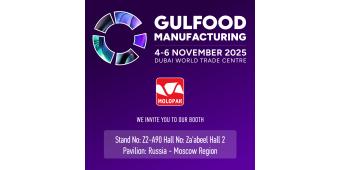
We invite you to the stand of the GulFood Manufacturing 2025 exhibition from November 4 to November 6 in Dubai.